New 12-Month Follow-up Study
Mechanical thrombectomy (EVT) has transformed the treatment of acute ischemic stroke, achieving high reperfusion rates. However, fewer than half of patients regain functional independence at 90 days, reflecting ongoing challenges such as reperfusion injury, neuroinflammation and secondary complications. Stroke recovery is highly dynamic - early gains may fade over time, while neuroplasticity and targeted rehabilitation can support continued improvement.
Adjunct cerebroprotective strategies aim to stabilize the neurovascular unit and translate early reperfusion success into sustained functional benefits. Cerebrolysin® has shown positive outcomes at 90 days and these effects are now supported by 12-month follow-up data.
The recent study Cerebrolysin® after Endovascular Thrombectomy in Stroke: 12‑Month Functional Outcomes in a Propensity‑Matched Cohort by Dr. Jacek Staszewski et al. published in Translational Stroke Research showed higher functional independence at 12 months (mRS 0–2) in the Cerebrolysin® group vs. control (74% vs. 46%; χ² p = 0.01; unadjusted OR 3.34, 95% CI 1.44–7.75; NNT 3.6).
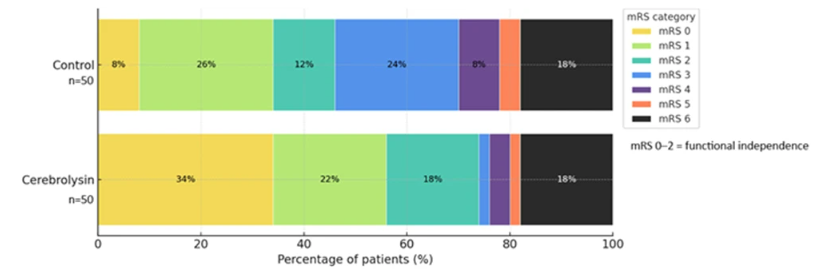
Unadjusted distribution of 12-month modified Rankin Scale (mRS) scores in EVT patients treated with Cerebrolysin® versus controls
This study suggests that Cerebrolysin® may play a valuable role in improving recovery in AIS patients undergoing recanalization therapy, as reflected in the following key outcomes:
- Significant Improvement of Functional Independence
- Early and Continous Recovery
- Improved Activities of Daily Living
- Lower Need for Institutional Care