Cerebroprotection in acute ischemic stroke: Perspectives on combining Cerebrolysin® with recanalization therapy
We are pleased to share the new publication Cerebroprotection in acute ischemic stroke: Perspectives on combining Cerebrolysin® with recanalization therapy, by Marc Ribó and colleagues. A very important milestone for the CERECAP program.
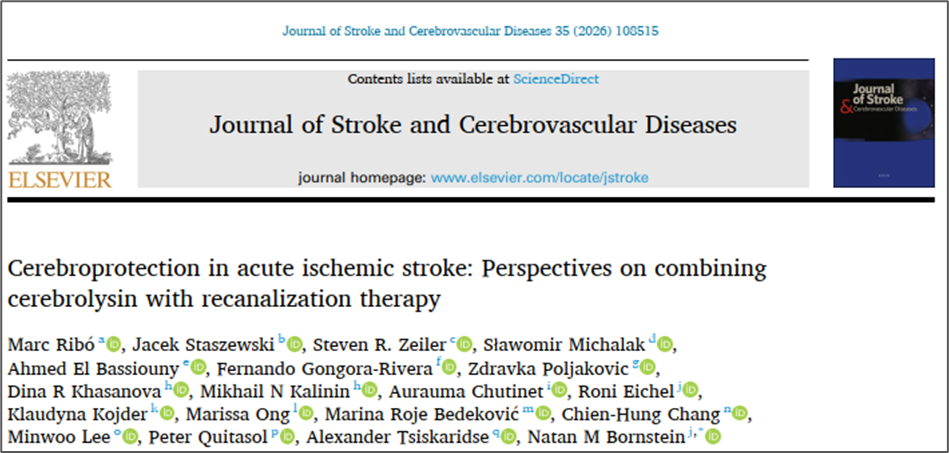
This paper explores the potential role of adjunct cerebroprotective strategies—specifically the use of Cerebrolysin® - in combination with reperfusion therapies for acute ischemic stroke (AIS). The authors discuss how targeting neuronal survival pathways alongside recanalization therapies may help reduce secondary brain injury and improve functional recovery.
Perspective: Cerebroprotection
Despite advances in recanalization therapies, reperfusion alone is insufficient for optimal outcomes in acute ischemic stroke, as neuronal injury persists after vessel reopening. Consistent with STAIR recommendations, future strategies should combine rapid reperfusion with effective cerebroprotection, targeting the entire neurovascular unit—including neurons, glial cells and the cerebral endothelium—to support meaningful recovery. Pleiotropic agents such as Cerebrolysin® align with this NVU-centered approach by
- modulating excitotoxicity
- reducing oxidative stress and inflammation
- promoting neurogenesis and synaptic repair
- and stabilizing the blood–brain barrier
Early cerebroprotective therapy—ideally initiated shortly after reperfusion therapy—may preserve the ischemic penumbra, maintain microcirculation and reduce reperfusion injury and hemorrhagic transformation. Findings from the CERECAP program suggest adjunct Cerebrolysin® can reduce these complications.